Like many others, I'm going to start my blog post with an apologia. I suppose it's to be expected at the end of the semester.
As in my previous post, there are some interesting things going on in the prologue; I am fascinated by the way Chaucer uses the prologues to the tales as a way to deal with the liminal space between narratives, while at the same time creating a super-narrative of the pilgrimage itself. Since this super-narrative is largely focused on interactions between characters, it is not surprising that these prologues and digressions often take the form of arguments between the pilgrims; the disagreements serve to develop the characters and turn the narrative from one text to another.
In the prologue to The Nun's Priest's Tale, the Knight expresses his dissatisfaction with the Monk's tale, and the Host agrees, asking him "hertely telle us somwhat elles; ... Sir, sey somwhat of huntyng, I yow preye." (3983, 2805). However, the Monk refuses, and instead the Nun's Priest takes a turn, to tell the tale of Chaunticleer and Pertelote.
I'm sure we're all shocked to discover that I'm particularly interested in Chaunticleer's dream, or to be more precise, the way he and Pertelote talk about his dream.
Pertelote is clearly an example of wifely sympathy when he describes the fox of his dream:
"Avoy!" quod she, "fy on yow, hertelees!
Allas," quod she, "for, by that God above,
Now han ye lost myn herte and al my love!
I kan nat love a coward, by my feith!
For certes, what so any womman seith,
We alle desiren, if it myghte bee,
To han housbondes hardy, wise, and free,
And secree—and no nygard, ne no fool,
Ne hym that is agast of every tool
Ne noon avauntour, by that God above!
How dorste ye seyn, for shame, unto youre love
That any thyng myghte make yow aferd?
Have ye no mannes herte, and han a berd?
Allas! And konne ye been agast of swevenys?
Nothyng, God woot, but vanitee in sweven is.
Swevenes engendren of repleccions,
And ofte of fume and of compleccions,
Whan humours been to habundant in a wight.
Certes this dreem, which ye han met to-nyght,
Cometh of the greete superfluytee
Of youre rede colera, perdee
Which causeth folk to dreden in hir dremes
Of arwes, and of fyr with rede lemes,
Of rede beestes, that they wol hem byte,
Of contek, and of whelpes, grete and lyte;
Rights as the humour of malencolie
Couseth ful many a man in sleep to crie
For feere of blake beres, of boles blake,
Or elles blake develes wole hem take.
Of othere humours koude I telle also
That werken many a man sleep ful wo;
But I wol passe as lightly as I kan. (2908–2939)
While later on they discuss different kinds of dreams and receptions of them (such as Cicero's Dream of Scipio), Pertelote's first discussion of the dream focuses first on her own emotional reaction to Chaunticleer's "cowardice", followed by a highly medical interpretation of why he would feel that way in the first place.
I find it interesting that Pertelote moves so seamlessly from blaming him for his reaction to giving a medical explanation for it. I haven't really figured out why I think this is important exactly, but it is reflecting the liminality between tale-narrative and "Tales"-narrative in an interesting way.
03 December 2013


12 November 2013
(Anti)feminism in the Wife of Bath's Tale
I assumed, as I prepared to blog this week, that I would be writing about the Friar's Tale or the Summoner's Tale, despite my love for (and the general gendery goodness of) the Wife of Bath's Tale. Because everyone would be writing about the Wife of Bath, right? You've got to show some love to the others, right?
Well, imagine my surprise when I saw the blog posts coming in—a little-known benefit of being quite delayed in my blogging this week, I suppose—and noticed that almost everyone was writing about the Friar and the Summoner. No love for Alysoun!
Alas, I couldn't let her story go undiscussed. The Wife of Bath has been one of my favorites for years, in large part because of Alysoun's sass. It seems that most people focus on the anti-feminist bent of this tale; between Alysoun's prologue, which (at least purportedly) demonstrates how a woman should be a good wife by using Alysoun as an example of how she shouldn't act. But frankly, this reading seems a little bit boring at this point in time.
Since I'm currently working on a paper about The Book of the Duchess, I couldn't help but think about the differing portrayals of women in these two works. I think it's interesting that there is so much focus in scholarship on whether or not (or to what extent) the Wife of Bath's tale and prologue are antifeminist. However, it's really the pairing of the prologue with the tale that brings this idea to the fore. The tale itself is not an original work, with analogues in early Irish myths and in the Marriage of Sir Gawain. Similar to The Book of the Duchess, the tale itself isn't about women so much as about the men who interact with them and how they do so. This is already super late, so I am actually going to leave this in a pathetic state of unfinished-ness. However, I'd like to look more in depth at the tale on its on vis-à-vis in concert with the prologue, and how it might develop our readings of the text beyond the "is it antifeminist" rhetoric.
Well, imagine my surprise when I saw the blog posts coming in—a little-known benefit of being quite delayed in my blogging this week, I suppose—and noticed that almost everyone was writing about the Friar and the Summoner. No love for Alysoun!
Alas, I couldn't let her story go undiscussed. The Wife of Bath has been one of my favorites for years, in large part because of Alysoun's sass. It seems that most people focus on the anti-feminist bent of this tale; between Alysoun's prologue, which (at least purportedly) demonstrates how a woman should be a good wife by using Alysoun as an example of how she shouldn't act. But frankly, this reading seems a little bit boring at this point in time.
Since I'm currently working on a paper about The Book of the Duchess, I couldn't help but think about the differing portrayals of women in these two works. I think it's interesting that there is so much focus in scholarship on whether or not (or to what extent) the Wife of Bath's tale and prologue are antifeminist. However, it's really the pairing of the prologue with the tale that brings this idea to the fore. The tale itself is not an original work, with analogues in early Irish myths and in the Marriage of Sir Gawain. Similar to The Book of the Duchess, the tale itself isn't about women so much as about the men who interact with them and how they do so. This is already super late, so I am actually going to leave this in a pathetic state of unfinished-ness. However, I'd like to look more in depth at the tale on its on vis-à-vis in concert with the prologue, and how it might develop our readings of the text beyond the "is it antifeminist" rhetoric.
28 October 2013
Pandarus and Troilus and feelings (oh my!)
I have been having no end of difficulties with the latter half of Troilus and Criseyde. Is it just me, or are these people more insufferable than the cast of Seinfeld? Between that, the massive amount of reading of these last three books, and my attempts to reorganize my thoughts about the dream visions as I amass sources for my paper, this post is going to be woefully short.
That being said, I found something of interest about halfway through book three. After much ofbook three the poem thus far has been focused on Troilus and how bad he feels about everything (to quote Megg, "HE IS SO UPSET"), Criseyde is bedridden and Troilus is preparing to visit her,
"But Pandarus, that so wel koude feele
In every thyng, to pleye anon bigan,
And syde, "Nece, se how this lord kan knele!
Nor for youre trouthe, se this gentil man!"
And with that word he for a quysshen ran,
And seyde, "Kneleth now, while that yow leste;
There God youre hertes brynge soone at reste!" (III.960–66)
Barney glosses "that so wel koude feele" as "who had such good sense." However, given the feelings which have been at issue throughout so much of this poem, it certainly shouldn't be considered an accident that Chaucer used this particular term. According to the Middle English dictionary, the verb "felen" has primary meaning much like those in Modern English, including a tactile, physical "feeling" and an emotional sense of the word; it is not until later definitions that we see senses of investigating or understanding.
Polysemousness in Chaucer's lines certainly is nothing new, and both meanings allow for a line dripping with irony. Whether we consider Pandarus to be described as having good sense (clearly he doesn't) or having much in the way of feelings (sensitive he is not), Chaucer is clearly having a go at him. By using this sort of language to describe Pandarus, however, he also draws attention to many of the faults and foibles of the eponymous characters of the poem, as well.
That being said, I found something of interest about halfway through book three. After much of
"But Pandarus, that so wel koude feele
In every thyng, to pleye anon bigan,
And syde, "Nece, se how this lord kan knele!
Nor for youre trouthe, se this gentil man!"
And with that word he for a quysshen ran,
And seyde, "Kneleth now, while that yow leste;
There God youre hertes brynge soone at reste!" (III.960–66)
Barney glosses "that so wel koude feele" as "who had such good sense." However, given the feelings which have been at issue throughout so much of this poem, it certainly shouldn't be considered an accident that Chaucer used this particular term. According to the Middle English dictionary, the verb "felen" has primary meaning much like those in Modern English, including a tactile, physical "feeling" and an emotional sense of the word; it is not until later definitions that we see senses of investigating or understanding.
Polysemousness in Chaucer's lines certainly is nothing new, and both meanings allow for a line dripping with irony. Whether we consider Pandarus to be described as having good sense (clearly he doesn't) or having much in the way of feelings (sensitive he is not), Chaucer is clearly having a go at him. By using this sort of language to describe Pandarus, however, he also draws attention to many of the faults and foibles of the eponymous characters of the poem, as well.
22 October 2013
Translation, metaphor, and CYA in Chaucer's Prologue(s)
Owt of thise blake wawes for to saylle,
O wynd, o wynd, the weder gynneth clere;
For in this see the boot hath swych travaylle,
Of my connyng, that unneth I it steere.
This see clepe I the tempestous matere
Of disespeir that Troilus was inne;
But now of hope the kalendes bygynne.
O lady myn, that called art Cleo,
Thow be my speed fro this forth, and my Muse,
To ryme wel this book til I have do;
Me nedeth here noon other art to use.
Forwhi to every lovere I me excuse,
That of no sentement I this endite,
But out of Latyn in my tonge it write.
Wherfore I nyl have neither thank ne blame
Of al this werk, but prey yow mekely,
Disblameth me if any word be lame,
For as myn auctour seyde, so sey I.
Ek though I speeke of love unfelyngly,
No wondre is, for it nothyng of newe is.
A blynd man kan nat juggen wel in hewis. (II.1–21)
The prologue of the second book of Troilus and Criseyde seems, to me, to serve a dual purpose (well, two main purposes, anyway, plus any number of others). First, much like the narrator's introduction of dream sequences in the dream visions, the prologue serves as a medium between author and story, drawing us out of the narrative in order to discuss the work (and Chaucer's own handling of it, "For as myn auctour seyde, so sey I"), and also drawing us back in (by discussing aspects of the tale which may seen particularly foreign to his readers). In addition, though, this prologue allows Chaucer to defend himself against critics, interact with a variety of sources, and ruminate about issues of historicity and translation.
To begin with, the first stanza of the prologue offers a fascinating metaphor of writing and thinking as sea travel. As an Anglo-Saxonist, this immediately draws my mind to Antonina Harbus's "The Maritime Imagination and the Paradoxical Mind in Old English Poetry," but this metaphor further connects the author/narrator to the eponymous characters of the text as they part ways. As he explains in lines 5–7, this "see" represents Troilus's dispair, but it also seems to represent the writing process, as he simultaneously alludes to Dante's Purgatorio and hints at the following discussion of sources and translation.
In the second and third stanzas, Chaucer further develops his allusions to other sources and earlier traditions. He simultaneously calls forth a Muse to help him write (implying some sort of artistry in this text—and this act is in itself a reference to the Thebaid), and also disclaims any fault for any material which is incorrect or distasteful to the reader, because, of course, he is simply translating it "out of Latyn." These stanzas draw further attention to the somewhat confusing disconnect between the role of artist and translator: on one hand, Chaucer is clearly an artist (and as anyone who knew his source material could tell, he is doing much more than simply translating a source into English); on the other, he clearly feels a need to validate his own writing through the sources he is purportedly using.
Finally, these same stanzas end with the claim of ignorance of the ways of love that are seen in the Dream Visions—Chaucer himself must be simply translating someone else's work, because he couldn't possibly be composing a text about love himself. Chaucer's use of irony and metaphor, and his overblown claims of his own lack of knowledge and his supposedly fierce devotion to his sources, all combine to make the prologue read largely as a disclaimer for any reader who didn't know his sources, and an amusement for those who did.
O wynd, o wynd, the weder gynneth clere;
For in this see the boot hath swych travaylle,
Of my connyng, that unneth I it steere.
This see clepe I the tempestous matere
Of disespeir that Troilus was inne;
But now of hope the kalendes bygynne.
O lady myn, that called art Cleo,
Thow be my speed fro this forth, and my Muse,
To ryme wel this book til I have do;
Me nedeth here noon other art to use.
Forwhi to every lovere I me excuse,
That of no sentement I this endite,
But out of Latyn in my tonge it write.
Wherfore I nyl have neither thank ne blame
Of al this werk, but prey yow mekely,
Disblameth me if any word be lame,
For as myn auctour seyde, so sey I.
Ek though I speeke of love unfelyngly,
No wondre is, for it nothyng of newe is.
A blynd man kan nat juggen wel in hewis. (II.1–21)
The prologue of the second book of Troilus and Criseyde seems, to me, to serve a dual purpose (well, two main purposes, anyway, plus any number of others). First, much like the narrator's introduction of dream sequences in the dream visions, the prologue serves as a medium between author and story, drawing us out of the narrative in order to discuss the work (and Chaucer's own handling of it, "For as myn auctour seyde, so sey I"), and also drawing us back in (by discussing aspects of the tale which may seen particularly foreign to his readers). In addition, though, this prologue allows Chaucer to defend himself against critics, interact with a variety of sources, and ruminate about issues of historicity and translation.
To begin with, the first stanza of the prologue offers a fascinating metaphor of writing and thinking as sea travel. As an Anglo-Saxonist, this immediately draws my mind to Antonina Harbus's "The Maritime Imagination and the Paradoxical Mind in Old English Poetry," but this metaphor further connects the author/narrator to the eponymous characters of the text as they part ways. As he explains in lines 5–7, this "see" represents Troilus's dispair, but it also seems to represent the writing process, as he simultaneously alludes to Dante's Purgatorio and hints at the following discussion of sources and translation.
In the second and third stanzas, Chaucer further develops his allusions to other sources and earlier traditions. He simultaneously calls forth a Muse to help him write (implying some sort of artistry in this text—and this act is in itself a reference to the Thebaid), and also disclaims any fault for any material which is incorrect or distasteful to the reader, because, of course, he is simply translating it "out of Latyn." These stanzas draw further attention to the somewhat confusing disconnect between the role of artist and translator: on one hand, Chaucer is clearly an artist (and as anyone who knew his source material could tell, he is doing much more than simply translating a source into English); on the other, he clearly feels a need to validate his own writing through the sources he is purportedly using.
Finally, these same stanzas end with the claim of ignorance of the ways of love that are seen in the Dream Visions—Chaucer himself must be simply translating someone else's work, because he couldn't possibly be composing a text about love himself. Chaucer's use of irony and metaphor, and his overblown claims of his own lack of knowledge and his supposedly fierce devotion to his sources, all combine to make the prologue read largely as a disclaimer for any reader who didn't know his sources, and an amusement for those who did.
08 October 2013
Hypsipyle!
More later, but I'm fascinated by the shifting focus of blame from Medea (in the Heroides) to Jasoun (in the Legend). Chaucer mentions blame of Medea twice, very briefly: when he directly refers to Hypsipyle's letter, he mentions that Medea "had his herte y-raft hir fro," and almost curses him to his later fate of Medea (unmentioned in Medea's own legend), praying that Medea "Moste finden him to hir untrewe also, And that she moste bothe hir children spille" (1572; 1573–4). In fact, the earlier portion of Hypsipyle's legend is focused on Jason's own blame in his seduction and betrayal of her, saying that "Betwixe him Jasoun and this Ercules. / Of these two here was mad a shrewed les / To come to hous upon an innocent. / For to bedote this quene was hir assent" (1543–1547).
In contrast, the Heroides focuses much more heavily on Medea's blame, for stealing Jason's heart away when he left; Hypsipyle's sense in the letter appears to assume Jason's general honorability, but he was in turn a victim of Medea. Chaucer seems inclined to move away from this representation, perhaps because of the proximity of Hypsipyle's and Medea's legend (in the Heroides, they are chapters VI and XII, whereas in Chaucer's poem Medea's follows immediately).
In contrast, the Heroides focuses much more heavily on Medea's blame, for stealing Jason's heart away when he left; Hypsipyle's sense in the letter appears to assume Jason's general honorability, but he was in turn a victim of Medea. Chaucer seems inclined to move away from this representation, perhaps because of the proximity of Hypsipyle's and Medea's legend (in the Heroides, they are chapters VI and XII, whereas in Chaucer's poem Medea's follows immediately).
24 September 2013
This is the Hous that Fame Built
In some ways, I think that the hardest thing about blogging for a class and on an academic subject is tone. This week, I'm going to try to geek out over now, before I've said anything of real substance. This is, I'm a bit ashamed to admit, the first time I've read Hous of Fame. I knew the basic premise, of course, and have heard about it plenty of times ... but I'd never actually read it before. My marginalia is chockablock with exclamation points, hearts and smilies, and, at one point, a barely-legible "this is crazypants!". Really, my goal in this blog post is to organize these completely un-critical thoughts into some sort of cogent thought about what is happening in this poem, particularly Book 2.
Of course, this is the cognition and identity show, so we all know what I'm going to write about. In particular, I want to focus on lines 555–566:
Til at the laste he to me spak
In mannes vois and sayde, "Awak!"
And be nat agast so, for shame!"
And called me by my name,
And, for I sholde the bet abreyde
Me mette "Awak" to me he seyde
Right in the same vois and stevene
That useth oon I coude nevene;
And with that vois, soth for to seyne,
My minde cam to me ageyne,
For it was goodly seyd to me,
So nas it never wont to be.
So. Let's provide a little context, shall we? Chaucer (the narrator, but considering that the eagle calls him "Geffrey" in line 728, we can probably assume that Chaucer and the narrator are even more closely linked in this poem than perhaps in other dream visions, where the connection between author and narrator can be a bit more blurry) is already asleep long before the lines began; he falls asleep on the tenth of December, when "...as I slept, me mette I was / Within a temple y-mad of glas" (119–20). After a long description of the engravings at the Temple of Venus (which mirror the paintings outside the courtyard in the Romaunt of the Rose—which was originally what I planned to write about this week), an eagle arrives overhead. Then, the narrative is disrupted again for the invocation of the second book. Finally, the eagle snatches poor Geffrey up only a few lines into Book 2, and he speaks the lines quoted above only about 20 lines after the beginning of the first book.
So when the eagle tells him to wake up, does he remain sleeping? When the narrator then dreams the invocation to walk up being spoken into his ear again, is he sleeping within his dream? Is he actually awake? After the speech, spoken by a voice "Right in the same stevene / That useth oon I coulde name," (According to the notes in the Norton, this may refer to Chaucer's wife), he awakens ... into his dream.
Speaking of the line between waking and sleep, I am blurring it far too much at present to be able to write any more coherently on the subject. I do want to develop this idea further; however, a practical application of the dream vision is not a helpful means to those ends. I will post more details in the morning.
Next week, stay tuned for an old favorite: (more) eagles, and dreamers, and Nature—oh, my! After that, there may be cookies.
Of course, this is the cognition and identity show, so we all know what I'm going to write about. In particular, I want to focus on lines 555–566:
Til at the laste he to me spak
In mannes vois and sayde, "Awak!"
And be nat agast so, for shame!"
And called me by my name,
And, for I sholde the bet abreyde
Me mette "Awak" to me he seyde
Right in the same vois and stevene
That useth oon I coude nevene;
And with that vois, soth for to seyne,
My minde cam to me ageyne,
For it was goodly seyd to me,
So nas it never wont to be.
So. Let's provide a little context, shall we? Chaucer (the narrator, but considering that the eagle calls him "Geffrey" in line 728, we can probably assume that Chaucer and the narrator are even more closely linked in this poem than perhaps in other dream visions, where the connection between author and narrator can be a bit more blurry) is already asleep long before the lines began; he falls asleep on the tenth of December, when "...as I slept, me mette I was / Within a temple y-mad of glas" (119–20). After a long description of the engravings at the Temple of Venus (which mirror the paintings outside the courtyard in the Romaunt of the Rose—which was originally what I planned to write about this week), an eagle arrives overhead. Then, the narrative is disrupted again for the invocation of the second book. Finally, the eagle snatches poor Geffrey up only a few lines into Book 2, and he speaks the lines quoted above only about 20 lines after the beginning of the first book.
So when the eagle tells him to wake up, does he remain sleeping? When the narrator then dreams the invocation to walk up being spoken into his ear again, is he sleeping within his dream? Is he actually awake? After the speech, spoken by a voice "Right in the same stevene / That useth oon I coulde name," (According to the notes in the Norton, this may refer to Chaucer's wife), he awakens ... into his dream.
Speaking of the line between waking and sleep, I am blurring it far too much at present to be able to write any more coherently on the subject. I do want to develop this idea further; however, a practical application of the dream vision is not a helpful means to those ends. I will post more details in the morning.
Next week, stay tuned for an old favorite: (more) eagles, and dreamers, and Nature—oh, my! After that, there may be cookies.
16 September 2013
Multivalent Realities in The Book of the Duchess and Romaunt de la Rose
Well, with a title like that, my post is clearly not going to live up to Megg's absolutely amazing post on BDSM and homoeroticism in Roman de la Rose. In fact, that post kind of made me want to drop the notes I'd been writing on the bridge between dreaming and waking to write about medieval smut and double entendre, but ... alas. We do what we know best.*
That being said, it's no secret that I have a lot of interest in emotion and cognition, and the way dreams are represented or used in medieval literature has been a growing part of this interest. In particular, I am interested two major aspects of dreams in Chaucer's literature: first, the way dreams are acting as a sort of medium through which the dreamer comes upon some new source of knowledge, and second, the different forms of reality that emerge for the dreamer (and by extension, the reader or listener) through this medium.
Chaucer's Romaunt of the Rose is a more complicated and yet also very interesting text for these purposes because it is a translation; to truly break any ground in this area would require a much closer familiarity with the French exemplar Roman de la Rose than my time has allowed me to develop of late. However, if in fact there were any noticeable differences in the way Chaucer and Lorris or de Meun deal with cognition and dreaming—well, that would be amazing, but I can't speculate on it just yet. (On the other hand, some of the things that the Romaunt got me started thinking about are even more interesting in some of Chaucer's original poems, so I'm also rooting for it being a formulaic translation when it comes to these issues)
The very beginning of the romance offers us a glimpse into the role of dreams:
"Many men sayn that in sweveninges
There nys but fables and lesynges;
But men may some sweven[es] sen
Whiche hardely that false ne ben,
But afterward ben apparaunt.
...
And whoso saith or weneth it be
A jape, or elles nycete,
To wene that dremes after falle,
Let whoso lyste a fol me calle." (1–5, 11–14)
Additionally, Macrobius and his Somnium Scipionis are again brought up (more on Macrobius later in the semester, I'm sure). Much like in the introduction to The Book of the Duchess, the act of entering upon the dream is both very direct and somewhat muddled. Unlike Duchess, the Narrator isn't preoccupied with his (in)ability to sleep; in addition, he does not enter the dream in the pseudo-waking state of others.
However, within both this dream and the dream in Duchess, there are additional layers of reality within the dream. The walled enclosure of the garden in the dream provides almost a second layer of the dream; as he moves from a serene natural dreamscape to the setting of the romantic drama, he must enter a sort of cloister, guarded by portraits of (horrible) women and a (also female) sort of gatekeeper. (As a note, I am very interested to look at the diction used to describe the women in the portraits and see how it is different from and similar to representations of Fortune in Duchesse.
This idea is completely confused at this point in time, and as a result I am not able to write in very much depth just yet. Keep an eye out for another post later this week that expands upon these ideas and maybe even draws upon Macrobius.
*That last sentence was shamelessly stolen from Megg's lips. Because it was too perfect to go to waste.
That being said, it's no secret that I have a lot of interest in emotion and cognition, and the way dreams are represented or used in medieval literature has been a growing part of this interest. In particular, I am interested two major aspects of dreams in Chaucer's literature: first, the way dreams are acting as a sort of medium through which the dreamer comes upon some new source of knowledge, and second, the different forms of reality that emerge for the dreamer (and by extension, the reader or listener) through this medium.
Chaucer's Romaunt of the Rose is a more complicated and yet also very interesting text for these purposes because it is a translation; to truly break any ground in this area would require a much closer familiarity with the French exemplar Roman de la Rose than my time has allowed me to develop of late. However, if in fact there were any noticeable differences in the way Chaucer and Lorris or de Meun deal with cognition and dreaming—well, that would be amazing, but I can't speculate on it just yet. (On the other hand, some of the things that the Romaunt got me started thinking about are even more interesting in some of Chaucer's original poems, so I'm also rooting for it being a formulaic translation when it comes to these issues)
The very beginning of the romance offers us a glimpse into the role of dreams:
"Many men sayn that in sweveninges
There nys but fables and lesynges;
But men may some sweven[es] sen
Whiche hardely that false ne ben,
But afterward ben apparaunt.
...
And whoso saith or weneth it be
A jape, or elles nycete,
To wene that dremes after falle,
Let whoso lyste a fol me calle." (1–5, 11–14)
Additionally, Macrobius and his Somnium Scipionis are again brought up (more on Macrobius later in the semester, I'm sure). Much like in the introduction to The Book of the Duchess, the act of entering upon the dream is both very direct and somewhat muddled. Unlike Duchess, the Narrator isn't preoccupied with his (in)ability to sleep; in addition, he does not enter the dream in the pseudo-waking state of others.
However, within both this dream and the dream in Duchess, there are additional layers of reality within the dream. The walled enclosure of the garden in the dream provides almost a second layer of the dream; as he moves from a serene natural dreamscape to the setting of the romantic drama, he must enter a sort of cloister, guarded by portraits of (horrible) women and a (also female) sort of gatekeeper. (As a note, I am very interested to look at the diction used to describe the women in the portraits and see how it is different from and similar to representations of Fortune in Duchesse.
This idea is completely confused at this point in time, and as a result I am not able to write in very much depth just yet. Keep an eye out for another post later this week that expands upon these ideas and maybe even draws upon Macrobius.
*That last sentence was shamelessly stolen from Megg's lips. Because it was too perfect to go to waste.
09 September 2013
A Lak of Boethius
The "Boethian Ballads"(generally comprised of Fortune, Trouthe, Gentilesse, and Lak of Steadfastnesse—hereafter LoS) are so called because of their subject matter, generally thought to coincide not only with Chaucer's interest in Boethius's Consolation of Philosophy, but with the time during which he was actively translating the work into his Middle English Boece. However, while some of the poems, such as Trouthe, experiment directly with ideas from the Consolation, LoS's Boethian ideas are more circumspect.
In Chaucer's Boece Book II, Prosa 6, 29–38: "O, ye erthliche bestes, considere ye nat over whiche thyng that it semeth that ye hand power? Now yif thou saye a mows among othere mysz that challanged to hymself-ward ryght and and power over all othere mysz, how gret scorn woldestow han of it! (Glosa. So fareth it by men [that the wikkid men have power over the wikkid men; that is to seye], the body hath power over the body.)" Chaucer uses this rhetoric to great effect in Trouthe, in which he uses a pun on Sir Philip de la Vache to compare the typical foibles of humans with the more "natural" activities of animals. Further, the refrain in this poem, "And trouthe thee shal delivere, it is no drede" focuses on a very typical Boethian view.
In contrast, John Scattergood argues in his article "Social and Political Issues in Chaucer: An Approach to Lak of Stedfastnesse," Chaucer is using the complaint poem genre to address specific political issues occurring at the time of its composition (in the case of LoS, he argues that he is referring to the political upheavals of c. 1387). While there are certainly some aspects of Boethianism in LoS, the refrain "That al is lost for lak of stedfastnesse" seems more focused on individual actions than the mutability of life. In this case, Chaucer's direct address to (purportedly) King Richard II is necessarily reducing the important of the Consolation of this poem—while the undertones of the poem remain focused on the fickleness of life, an invocation to or support of action on the part of the king does not allow for the same sort of inevitability which appears in his other poems.
Why, though, does any of this matter? While the influences of Boethius on Chaucer (and many other medieval writers) are important to consider, it is equally important to not become hamstrung by such associations. It may be useful to think of Chaucer's poems in groupings such as the "Boethian Ballads", but rethinking the different ways in which Chaucer is using Boethian rhetoric creates new readings of his individual poems, as well.
In Chaucer's Boece Book II, Prosa 6, 29–38: "O, ye erthliche bestes, considere ye nat over whiche thyng that it semeth that ye hand power? Now yif thou saye a mows among othere mysz that challanged to hymself-ward ryght and and power over all othere mysz, how gret scorn woldestow han of it! (Glosa. So fareth it by men [that the wikkid men have power over the wikkid men; that is to seye], the body hath power over the body.)" Chaucer uses this rhetoric to great effect in Trouthe, in which he uses a pun on Sir Philip de la Vache to compare the typical foibles of humans with the more "natural" activities of animals. Further, the refrain in this poem, "And trouthe thee shal delivere, it is no drede" focuses on a very typical Boethian view.
In contrast, John Scattergood argues in his article "Social and Political Issues in Chaucer: An Approach to Lak of Stedfastnesse," Chaucer is using the complaint poem genre to address specific political issues occurring at the time of its composition (in the case of LoS, he argues that he is referring to the political upheavals of c. 1387). While there are certainly some aspects of Boethianism in LoS, the refrain "That al is lost for lak of stedfastnesse" seems more focused on individual actions than the mutability of life. In this case, Chaucer's direct address to (purportedly) King Richard II is necessarily reducing the important of the Consolation of this poem—while the undertones of the poem remain focused on the fickleness of life, an invocation to or support of action on the part of the king does not allow for the same sort of inevitability which appears in his other poems.
Why, though, does any of this matter? While the influences of Boethius on Chaucer (and many other medieval writers) are important to consider, it is equally important to not become hamstrung by such associations. It may be useful to think of Chaucer's poems in groupings such as the "Boethian Ballads", but rethinking the different ways in which Chaucer is using Boethian rhetoric creates new readings of his individual poems, as well.
02 September 2013
Truth and fiction in the Dream Vision
My next few posts will likely be a sort of smorgasbord of partly-formed ideas I have about The Book of the Duchess. There are many things about this poem that captivate me, and I am fairly certain that my larger project later in the semester will involve this poem, but I'm not yet certain which aspect will be my main focus.
While dreams and visions are by no means rare in earlier writing, the "dream vision" is a real preoccupation of both Middle English poets and contemporary scholars. Several times in The Book of the Duchess, the narrator makes mention of the Somnium Scipionis and Macrobius's treatise on dream interpretation based on the Somnium. In addition to Macrobius, Gregory the Great's Homilies on Ezekiel and the Somniale Danielis are all common medieval sources of dream theory. However, these medieval theorists don't seem to spend much time analyzing the paradox of the dream vision, nor do they focus on the liminal space between waking and dreaming. As we discussed in class, is Alcyone awake when Morpheus comes in, in the guise of her dead husband, and tells her to wake up? Is the narrator awake or asleep when he is "waked / With smale foules a grete hepe / That had affrayed me out of my slepe / Thurgh noyse and swetness of hir songe;" (294–97). Contemporary writing rarely focuses on how dreams begin and end—and our focus on any dream, whether our own or a literary dream, is usually the plot and development rather than the entrée and exit—yet the dream visions of The Book of the Duchess and many (most? all?) other Middle English poetry revolve around the act of waking into the dream.
As I've recently been writing about affect and realism in Anglo-Saxon dreams and visions, I find this preoccuptation curious. It seems almost that in order to enter this new world of the dream, the dreamer has to pass through a liminal space between the waking world and the dreaming world through the physical acts of falling asleep and waking up. There is an authenticity created by the act of waking which allows the dreamer (or in a more practical sense, the reader) to accept the truth of the dream or vision.
What, then, might this tell us about Chaucer's role as narrator in The Book of the Duchess? Chaucer has to walk a narrow path here. In writing a poem about the death of a (exceedingly powerful) patron's beloved wife, the dual truth and fiction of the dream vision offers him a venue in which he can write a tribute to her and still engage with greater issues of grief, love, narrativity, and authenticity.
While dreams and visions are by no means rare in earlier writing, the "dream vision" is a real preoccupation of both Middle English poets and contemporary scholars. Several times in The Book of the Duchess, the narrator makes mention of the Somnium Scipionis and Macrobius's treatise on dream interpretation based on the Somnium. In addition to Macrobius, Gregory the Great's Homilies on Ezekiel and the Somniale Danielis are all common medieval sources of dream theory. However, these medieval theorists don't seem to spend much time analyzing the paradox of the dream vision, nor do they focus on the liminal space between waking and dreaming. As we discussed in class, is Alcyone awake when Morpheus comes in, in the guise of her dead husband, and tells her to wake up? Is the narrator awake or asleep when he is "waked / With smale foules a grete hepe / That had affrayed me out of my slepe / Thurgh noyse and swetness of hir songe;" (294–97). Contemporary writing rarely focuses on how dreams begin and end—and our focus on any dream, whether our own or a literary dream, is usually the plot and development rather than the entrée and exit—yet the dream visions of The Book of the Duchess and many (most? all?) other Middle English poetry revolve around the act of waking into the dream.
As I've recently been writing about affect and realism in Anglo-Saxon dreams and visions, I find this preoccuptation curious. It seems almost that in order to enter this new world of the dream, the dreamer has to pass through a liminal space between the waking world and the dreaming world through the physical acts of falling asleep and waking up. There is an authenticity created by the act of waking which allows the dreamer (or in a more practical sense, the reader) to accept the truth of the dream or vision.
What, then, might this tell us about Chaucer's role as narrator in The Book of the Duchess? Chaucer has to walk a narrow path here. In writing a poem about the death of a (exceedingly powerful) patron's beloved wife, the dual truth and fiction of the dream vision offers him a venue in which he can write a tribute to her and still engage with greater issues of grief, love, narrativity, and authenticity.
That trewely I that made this blog...
A full fourteen months after my last post, I sorely doubt that anyone is following my poor, sad, lonely blog any longer. A lot of things have happened in the last year—I moved across the country to start graduate school; I finished my first year of graduate school and passed my exams; I became simultaneously sorely in need of cooking therapy, and pathetically short of time in which to do it. In addition, almost every aspect of my move away from Southern California was positive, but the loss of always-availabile fresh local produce has been a difficult one.
Enter the fall semester 2013. Among other things, I am taking a class on Chaucer, and one of the class assignments is to maintain an ongoing blog through which we can explore ideas which may not get adequate airtime in class, and also to see what others in the class may be thinking about and working on. This seemed like an ideal time to try to breathe some life into this blog again, in time for birthday cakes, Hallowe'en cookies, and Thanksgiving side-dishes. As a result, I can't promise that there won't be recipes scattered in here for the remainder of the semester, but the main focus of this space for the next four months will be discussing some of Chaucer's many poems.
Coming soon: The Book of the Duchess. Dreams, liminality, gender, and adaptation—it's like this thing was written for me.
Enter the fall semester 2013. Among other things, I am taking a class on Chaucer, and one of the class assignments is to maintain an ongoing blog through which we can explore ideas which may not get adequate airtime in class, and also to see what others in the class may be thinking about and working on. This seemed like an ideal time to try to breathe some life into this blog again, in time for birthday cakes, Hallowe'en cookies, and Thanksgiving side-dishes. As a result, I can't promise that there won't be recipes scattered in here for the remainder of the semester, but the main focus of this space for the next four months will be discussing some of Chaucer's many poems.
Coming soon: The Book of the Duchess. Dreams, liminality, gender, and adaptation—it's like this thing was written for me.
06 July 2012
Salad makes everything better
... I hope.
Are any of you left, dear readers? My reader is full of hundreds of posts from blogs that I love, but a recent gruelling schedule has meant that I hardly have time to think about food, much less cook it, much less read or write about it. I've managed to find time to scribble down recipes and sometimes even take photographs—my busy schedule has actually allowed me to refine many dishes because I've been eating the same thing meal after meal—but when it comes to writing, I just get stuck.
I even thought about putting my blog out of its misery, but the fact is that when I do get a chance to write here, it's a little corner of my life that is quietly joyful. I didn't want to turn my back on it despite the chaos of the last year (and the different, continuing chaos that I have to look forward to in the next year). Then I polled a group of friends and they voted in a landslide for me to keep it and do what I can. Wise words from wise people ... so here I am.
The current weight on my shoulders (sometimes literally) is a move that is happening in less than a month. I don't particularly like moving. We are a relatively simple pair, but the few things that we like to have are all heavy. Books? Boxes of them. Music? Too much to mention - and not packed onto our hard drives. Cast Iron? I bless the luck that allowed me to accumulate a large collection of Le Creuset by the age of 24, but I don't look forward to lugging it around.
Due to the planning, the yard sale, the various too-big-to-fit-into-the-moving-truck-and/or-new-apartment items that are being sold on craigslist or ebay, and the books being sorted into "take with us"/"sell to a local shop"/"store at Mike's step mom's house" categories, our home is starting to make me twitch. I've managed to keep the kitchen relatively ordered thus far, and tonight I'm going to inventory the freezer, fridge, and pantry to figure out what we need to eat (and what kinds of meals to make it into) before we pack up.
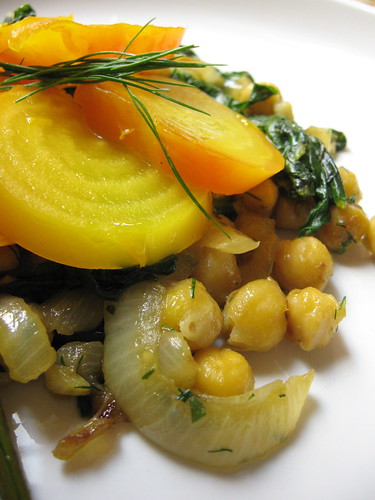
I can tell you now that one thing that means is lots of legumes. Since I prefer dry beans to canned, I have a fairly well-stocked pantry, and since the weather is quickly warming up, I foresee a lot of salads in our future. After all, when it's hot outside and you're too busy to do much cooking, salad makes everything better.
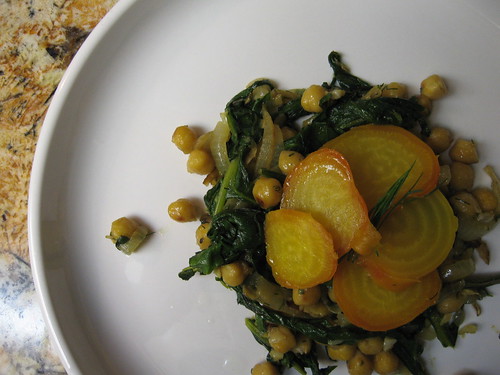
Herbed Chick Pea Salad with Beets
Vaguely inspired by a description of a recipe in Yotam Ottolenghi's Plenty via a friend (sadly, this cookbook hasn't made its way to my house yet).
Of course, roasting beets does involve heating up the oven, and beets aren't at their best right now (I made this several weeks ago before the spring-to-summer transition was complete), but this salad would be equally delicious with sautéed zucchini, super-ripe tomatoes, or even (as I'm planning this weekend) garlicky cubes of eggplant.
As an added note, this salad is equally good warm or cold, and would make a great accompaniment to cold chicken or something similar at a picnic.
1 bunch of beets, tops included (I used golden beets)
3 tablespoons olive oil, plus more as needed
½ medium onion, thinly sliced
4 cloves garlic, minced
Approximately 3 cups cooked chick peas (cooked from about 1 cup dry, or two cans, rinsed and drained)
1 teaspoon good salt, plus more if needed
black pepper
Several large sprigs, or a handful, fresh dill, chopped
1 teaspoon dried oregano (optional)
black pepper
red wine vinegar as needed
To roast the beetroots, remove and reserve the tops, wash the roots, and place them on a piece of aluminum foil. Drizzle with 1 tablespoon of the olive oil and sprinkle with a little bit of salt, then wrap them in the foil and roast at 400ºF until tender, usually 20 minutes to an hour depending on their size (note that the temperature doesn't matter too much if you're already using your oven for something else). When tender, let the beets cool, then remove and discard the skins; set aside.
Heat the remaining 2 tablespoons oil in a large heavy skillet on medium-high heat. Add the onions and sauté until translucent and beginning to soften, but not browned, 3-4 minutes. Meanwhile, wash the beet tops well and shake some of the water off; tear or chop into 2-3" pieces and set aside.
Add the garlic to the onions and stir just until fragrant, then add the beet greens, a handful or so at a time, stirring until wilted. Add the salt and the drained chick peas and cook, stirring occasionally, until the beans are heated through and the greens are tender, around 3-5 minutes. Add the dill and oregano, plus black pepper to taste; adjust seasonings as needed. Remove from the heat.
Meanwhile, either slice or chop up the beets (chopping them is best if you will serve it cold or as a side dish, but sliced has a nice presentation for a knife-and-fork meal). If you chop the beets, add them to the chick pea mixture and stir to combine.
Plate the salad; if you sliced the beets, arrange them atop the beans. Drizzle with some additional olive oil and a bit of red wine vinegar, and a bit of additional coarse salt if desired. Serve warm or cold.
Serves 4-6 as a side dish, 3 as a main dish
Are any of you left, dear readers? My reader is full of hundreds of posts from blogs that I love, but a recent gruelling schedule has meant that I hardly have time to think about food, much less cook it, much less read or write about it. I've managed to find time to scribble down recipes and sometimes even take photographs—my busy schedule has actually allowed me to refine many dishes because I've been eating the same thing meal after meal—but when it comes to writing, I just get stuck.
I even thought about putting my blog out of its misery, but the fact is that when I do get a chance to write here, it's a little corner of my life that is quietly joyful. I didn't want to turn my back on it despite the chaos of the last year (and the different, continuing chaos that I have to look forward to in the next year). Then I polled a group of friends and they voted in a landslide for me to keep it and do what I can. Wise words from wise people ... so here I am.
The current weight on my shoulders (sometimes literally) is a move that is happening in less than a month. I don't particularly like moving. We are a relatively simple pair, but the few things that we like to have are all heavy. Books? Boxes of them. Music? Too much to mention - and not packed onto our hard drives. Cast Iron? I bless the luck that allowed me to accumulate a large collection of Le Creuset by the age of 24, but I don't look forward to lugging it around.
Due to the planning, the yard sale, the various too-big-to-fit-into-the-moving-truck-and/or-new-apartment items that are being sold on craigslist or ebay, and the books being sorted into "take with us"/"sell to a local shop"/"store at Mike's step mom's house" categories, our home is starting to make me twitch. I've managed to keep the kitchen relatively ordered thus far, and tonight I'm going to inventory the freezer, fridge, and pantry to figure out what we need to eat (and what kinds of meals to make it into) before we pack up.
I can tell you now that one thing that means is lots of legumes. Since I prefer dry beans to canned, I have a fairly well-stocked pantry, and since the weather is quickly warming up, I foresee a lot of salads in our future. After all, when it's hot outside and you're too busy to do much cooking, salad makes everything better.
Herbed Chick Pea Salad with Beets
Vaguely inspired by a description of a recipe in Yotam Ottolenghi's Plenty via a friend (sadly, this cookbook hasn't made its way to my house yet).
Of course, roasting beets does involve heating up the oven, and beets aren't at their best right now (I made this several weeks ago before the spring-to-summer transition was complete), but this salad would be equally delicious with sautéed zucchini, super-ripe tomatoes, or even (as I'm planning this weekend) garlicky cubes of eggplant.
As an added note, this salad is equally good warm or cold, and would make a great accompaniment to cold chicken or something similar at a picnic.
1 bunch of beets, tops included (I used golden beets)
3 tablespoons olive oil, plus more as needed
½ medium onion, thinly sliced
4 cloves garlic, minced
Approximately 3 cups cooked chick peas (cooked from about 1 cup dry, or two cans, rinsed and drained)
1 teaspoon good salt, plus more if needed
black pepper
Several large sprigs, or a handful, fresh dill, chopped
1 teaspoon dried oregano (optional)
black pepper
red wine vinegar as needed
To roast the beetroots, remove and reserve the tops, wash the roots, and place them on a piece of aluminum foil. Drizzle with 1 tablespoon of the olive oil and sprinkle with a little bit of salt, then wrap them in the foil and roast at 400ºF until tender, usually 20 minutes to an hour depending on their size (note that the temperature doesn't matter too much if you're already using your oven for something else). When tender, let the beets cool, then remove and discard the skins; set aside.
Heat the remaining 2 tablespoons oil in a large heavy skillet on medium-high heat. Add the onions and sauté until translucent and beginning to soften, but not browned, 3-4 minutes. Meanwhile, wash the beet tops well and shake some of the water off; tear or chop into 2-3" pieces and set aside.
Add the garlic to the onions and stir just until fragrant, then add the beet greens, a handful or so at a time, stirring until wilted. Add the salt and the drained chick peas and cook, stirring occasionally, until the beans are heated through and the greens are tender, around 3-5 minutes. Add the dill and oregano, plus black pepper to taste; adjust seasonings as needed. Remove from the heat.
Meanwhile, either slice or chop up the beets (chopping them is best if you will serve it cold or as a side dish, but sliced has a nice presentation for a knife-and-fork meal). If you chop the beets, add them to the chick pea mixture and stir to combine.
Plate the salad; if you sliced the beets, arrange them atop the beans. Drizzle with some additional olive oil and a bit of red wine vinegar, and a bit of additional coarse salt if desired. Serve warm or cold.
Serves 4-6 as a side dish, 3 as a main dish
24 May 2012
Long-forgotten
I've sat down to write this post at least two dozen times in the past couple weeks. Somehow, no matter what I do nothing comes out on the page. I could have moved on to any number of other recipes, but my funny little brain insisted on sharing this one first.
I guess it's appropriate. Mike had been requesting this cake for months—since I made Maple Mousse Cakes, in fact, and I see that that was over a year ago now. Cake scraps, of course, are one of the best parts of cake making, and Mike is well aware of that fact. It doesn't take very long after a carrot cake has cooled to find him lingering at the periphery of the kitchen offering to help me frost it. The mousse cakes, cut out of a very thin layer of sheet cake, provided all sorts of tasty scraps, and Mike declared the walnut cake base perfect just as it was.
I, however, am an unapologetic fiddler. I see recipes and can't help but tweak them; I make notes in the margins of magazines and cookbooks, lists of dates marking the different changes I tried; after a few bites of any new meal I'm already thinking about what I can do next time to take it that little bit closer to perfection.
The trouble was ... I couldn't think of what to do with that walnut cake. I thought about a syrup or glaze like so many simple, rustic cakes, but nothing seemed to be a good fit. Mike said it would be delicious as is, but that seemed a little bit too rustic. I set the recipe away in the back of my brain and started worrying about other things, like what to do with those 6 pounds of marionberries in my freezer or what kind of sausage we should make next (Oh, yes, we've started making sausage from scratch now—more on that later).
Finally I had a breakthrough. Unsurprisingly, much of the credit goes to Deb over at Smitten Kitchen. An online friend mentioned something about Hazelnut Brown Butter Cake, and when I clicked the link everything fell into place. How could I have forgotten chocolate?
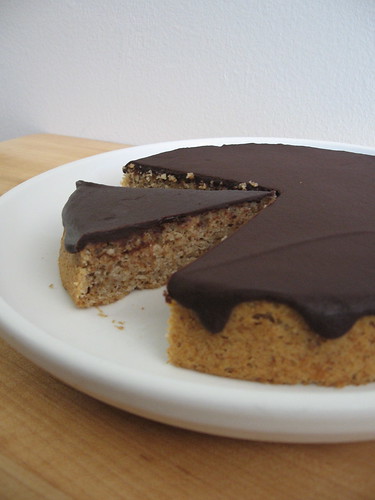
Ganache it was.
That very evening, I got to work. I made a few changes to my original recipe: omitting the bourbon, browning the butter (because when is that a bad idea?), and beating the egg whites to further lighten the crumb. Mike still says it would be fine without the ganache, but with it, it's nearly perfect. The cake is moist and tender, with a robust walnut flavor that is set off by the brown butter. The ganache is velvety and rich—and just enough to keep from overwhelming someone (like me) who is frankly on the fence about walnuts most of the time.
Of course, that doesn't mean that I wasn't already making plans for the next one.
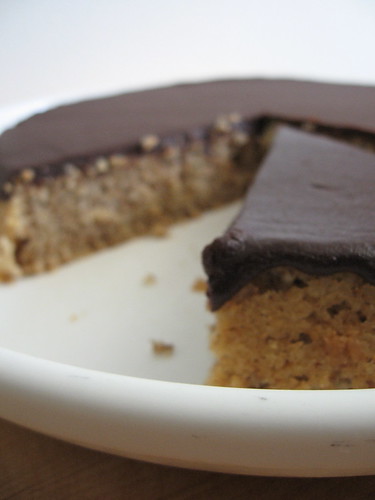
Walnut Cake with Bittersweet Ganache
Note that this recipe makes enough batter for one ten inch layer (or a very thin layer in a 13"x18" rimmed sheet); one eight inch and one six inch pan can be used instead if you prefer.
For the cake:
6 ounces butter (1½ sticks)
4 ounces walnuts (1 heaping cup)
5 ounces unbleached flour (about a scant 1¼ cups)
½ teaspoon salt
1½ teaspoon baking powder
5 ounces white sugar (about ¾ cup)
2 ounces brown sugar (about ¼ cup packed)
3 large egg whites
¾ cup milk
For the ganache:
4 ounces bittersweet chocolate, chopped
¼ cup heavy cream
Preheat the oven to 350ºF with a rack set in the center of the oven. Butter one ten inch round pan (or one 8" and one 6" pan). Line the bottom of the pan with parchment, butter the parchment, and set the pan(s) aside.
Brown the butter in a medium saucepan over medium heat, stirring occasionally until the milk solids are evenly brown and the butter is very nutty smelling, 5-8 minutes. Set aside to cool.
Finely grind the walnuts in a food processor, being careful not to over-process. Add the other dry ingredients (including the sugars) and pulse to combine.
Whip the egg whites to soft peaks. Transfer the dry ingredients to a large bowl with the milk. Stir just to combine, then add the brown butter and stir until well mixed. Carefully fold in the egg whites. Spread the batter evenly in the pan(s). Bake until a tester inserted in the center comes out clean, 50-55 minutes (35-40 with smaller pans).
Cool in the pan for 15-20 minutes, then run a knife around the edges to loosen and invert onto a rack. Remove the pan and the parchment, then set right side up to cool completely.
Meanwhile, make the ganache. Heat the cream to a boil on the stove or in the microwave; pour over the chocolate and let sit for a minute or two. Stir until very smooth. (Note: if it ends up being too thick with this method, you can transfer the mixture back to the stove on very low heat or microwave in five second bursts, until smooth and loose enough to pour).
Arrange the cake(s) on a plate and pour the ganache over. Use an offset spatula to spread the ganache in an even layer over the top, letting it drip, more or less as to your tastes, over the edges of the cake. Let the cake sit at room temperature to firm up.
Note that if you will be eating your cake in more than the next day, the ganache needs refrigeration.
Serves about 12
I guess it's appropriate. Mike had been requesting this cake for months—since I made Maple Mousse Cakes, in fact, and I see that that was over a year ago now. Cake scraps, of course, are one of the best parts of cake making, and Mike is well aware of that fact. It doesn't take very long after a carrot cake has cooled to find him lingering at the periphery of the kitchen offering to help me frost it. The mousse cakes, cut out of a very thin layer of sheet cake, provided all sorts of tasty scraps, and Mike declared the walnut cake base perfect just as it was.
I, however, am an unapologetic fiddler. I see recipes and can't help but tweak them; I make notes in the margins of magazines and cookbooks, lists of dates marking the different changes I tried; after a few bites of any new meal I'm already thinking about what I can do next time to take it that little bit closer to perfection.
The trouble was ... I couldn't think of what to do with that walnut cake. I thought about a syrup or glaze like so many simple, rustic cakes, but nothing seemed to be a good fit. Mike said it would be delicious as is, but that seemed a little bit too rustic. I set the recipe away in the back of my brain and started worrying about other things, like what to do with those 6 pounds of marionberries in my freezer or what kind of sausage we should make next (Oh, yes, we've started making sausage from scratch now—more on that later).
Finally I had a breakthrough. Unsurprisingly, much of the credit goes to Deb over at Smitten Kitchen. An online friend mentioned something about Hazelnut Brown Butter Cake, and when I clicked the link everything fell into place. How could I have forgotten chocolate?
Ganache it was.
That very evening, I got to work. I made a few changes to my original recipe: omitting the bourbon, browning the butter (because when is that a bad idea?), and beating the egg whites to further lighten the crumb. Mike still says it would be fine without the ganache, but with it, it's nearly perfect. The cake is moist and tender, with a robust walnut flavor that is set off by the brown butter. The ganache is velvety and rich—and just enough to keep from overwhelming someone (like me) who is frankly on the fence about walnuts most of the time.
Of course, that doesn't mean that I wasn't already making plans for the next one.
Walnut Cake with Bittersweet Ganache
Note that this recipe makes enough batter for one ten inch layer (or a very thin layer in a 13"x18" rimmed sheet); one eight inch and one six inch pan can be used instead if you prefer.
For the cake:
6 ounces butter (1½ sticks)
4 ounces walnuts (1 heaping cup)
5 ounces unbleached flour (about a scant 1¼ cups)
½ teaspoon salt
1½ teaspoon baking powder
5 ounces white sugar (about ¾ cup)
2 ounces brown sugar (about ¼ cup packed)
3 large egg whites
¾ cup milk
For the ganache:
4 ounces bittersweet chocolate, chopped
¼ cup heavy cream
Preheat the oven to 350ºF with a rack set in the center of the oven. Butter one ten inch round pan (or one 8" and one 6" pan). Line the bottom of the pan with parchment, butter the parchment, and set the pan(s) aside.
Brown the butter in a medium saucepan over medium heat, stirring occasionally until the milk solids are evenly brown and the butter is very nutty smelling, 5-8 minutes. Set aside to cool.
Finely grind the walnuts in a food processor, being careful not to over-process. Add the other dry ingredients (including the sugars) and pulse to combine.
Whip the egg whites to soft peaks. Transfer the dry ingredients to a large bowl with the milk. Stir just to combine, then add the brown butter and stir until well mixed. Carefully fold in the egg whites. Spread the batter evenly in the pan(s). Bake until a tester inserted in the center comes out clean, 50-55 minutes (35-40 with smaller pans).
Cool in the pan for 15-20 minutes, then run a knife around the edges to loosen and invert onto a rack. Remove the pan and the parchment, then set right side up to cool completely.
Meanwhile, make the ganache. Heat the cream to a boil on the stove or in the microwave; pour over the chocolate and let sit for a minute or two. Stir until very smooth. (Note: if it ends up being too thick with this method, you can transfer the mixture back to the stove on very low heat or microwave in five second bursts, until smooth and loose enough to pour).
Arrange the cake(s) on a plate and pour the ganache over. Use an offset spatula to spread the ganache in an even layer over the top, letting it drip, more or less as to your tastes, over the edges of the cake. Let the cake sit at room temperature to firm up.
Note that if you will be eating your cake in more than the next day, the ganache needs refrigeration.
Serves about 12
29 April 2012
Turn around the winter blues
We may be well into spring here in southern California (I've been eating asparagus for a month now), but since it's still snowing in parts of the country, I don't mind writing about kale in April.
Kale is one of my go-to winter vegetables. It's delicious braised or sautéed, in soups or gratin, and I'm shocked to see that I have not put a single kale recipe on this site.
I suppose I shouldn't be surprised. It's not the most photogenic of foods, and for me, at least, kale tends to find itself sautéed, perhaps seasoned with garlic and herbs or soy sauce and sesame, and relegated to the oft-forgotten category of side vegetable.
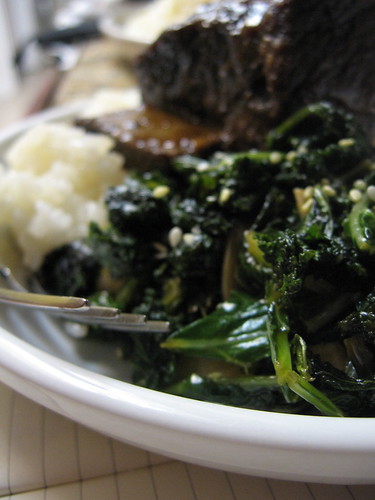
And this is no exception, but it is, at least, a little bit more unusual. Pickled kale.
You heard me right. When I was flipping through Liana's fantastic cookbook late last fall, I saw those words and nearly ran to buy new canning jars that minute. Kale is available nearly year-round here, but I made these in mid-fall, when it seemed to be overgrowing all the farmers' fields. Since appearances aren't so important for a humble pickle, late season kale would also be ideal; just snatch it up before the weather gets too warm, because that's when it starts to be bitter.
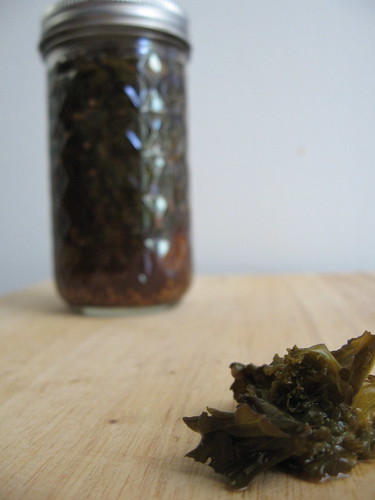
Now, if you're anything like Mike, my sister, or anybody else that I told about this recipe, you're probably wondering what the heck you might do with pickled kale. I wasn't sure myself when I made it. Liana suggests serving it stirred into Jamaican rice and peas (still on my list) or on a sandwich. My first thought was to pair the zing and little bit of spice with pastrami.
It was a revelation. A smear of spicy dijon mustard, several slices of pastrami and Swiss cheese, and a generous layer of pickled kale slapped between two slices of rye bread, and we ate almost an entire jar (half-pint, in our defense) of pickles with one meal. Since then I've also experimented with a meatless version—grilled Swiss on rye with mustard & kale pickles—and it's just as good.
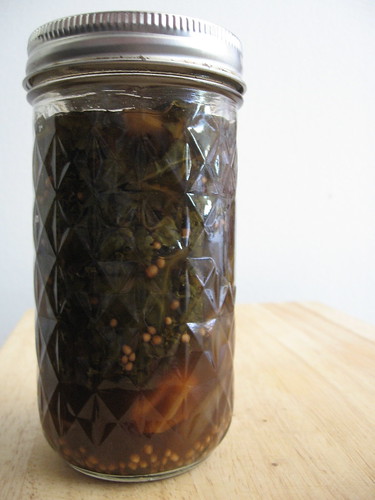
Spicy Pickled Kale
Adapted from Canning for a New Generation
Note: Liana's recipe called for 7 cups cider vinegar and 1 cup balsamic, but I was running out of cider vinegar (and using a bit less kale) and so changed the amounts.
two big or 3 smaller bunches of curly kale (I had 3.5 pounds total)
3 tablespoons yellow mustard seeds
1 tablespoon whole allspice
1 tablespoon green cardamom pods, lightly crushed
3 cups apple cider vinegar
3 ½ cups white vinegar
½ cup balsamic vinegar
1 cup water
2 tablespoons kosher salt
2 tablespoons sugar
3 large or six small habañero chiles
6 cloves garlic
1 small onion, cut into 12 wedges
Wash the greens, then pull the leaves off of the hard ribs. Discard the ribs and stems or keep for another use. Chop the kale into medium chunks then shake off most of the water (the cookbook recommends putting them in an old pillowcase and shaking it outside. I just used the salad spinner in batches).
Combine the mustard seeds, allspice, and cardamom in a small bowl; set aside.
To prep for canning, heat water in a large canning pot; wash the jars and keep them in the pot, and put the lids in a small heatproof pot or bowl.
Combine the vinegars and water with the salt or sugar and bring just to a boil; cover, remove from heat, and set aside.
Ladle boiling water from the canning pot into the bowl with the lids. Remove the jars from the canning pot (returning the water to the pot) and carefully place them on a towel.
Halve the chiles, if you have large ones. Place one chile or chile half, one garlic clove, and a wedge or two of onion in each jar. Pack the greens into the jars (tightly, as they will shrink when processing). Distribute the spices into the jars as well. Carefully ladle the hot vinegar mixture into the jars, using a chopstick as needed to remove air bubbles, and leaving ½ inch headspace.
Put the lids on the jars and screw rings on just finger-tight. Return the jars to the canning pot and process at a full boil for 15 minutes. Remove the jars to the folded towel and let rest overnight. (Check them after an hour or so to make sure they have sealed; if not, transfer to the fridge.)
Makes about 6 pints
Kale is one of my go-to winter vegetables. It's delicious braised or sautéed, in soups or gratin, and I'm shocked to see that I have not put a single kale recipe on this site.
I suppose I shouldn't be surprised. It's not the most photogenic of foods, and for me, at least, kale tends to find itself sautéed, perhaps seasoned with garlic and herbs or soy sauce and sesame, and relegated to the oft-forgotten category of side vegetable.
And this is no exception, but it is, at least, a little bit more unusual. Pickled kale.
You heard me right. When I was flipping through Liana's fantastic cookbook late last fall, I saw those words and nearly ran to buy new canning jars that minute. Kale is available nearly year-round here, but I made these in mid-fall, when it seemed to be overgrowing all the farmers' fields. Since appearances aren't so important for a humble pickle, late season kale would also be ideal; just snatch it up before the weather gets too warm, because that's when it starts to be bitter.
Now, if you're anything like Mike, my sister, or anybody else that I told about this recipe, you're probably wondering what the heck you might do with pickled kale. I wasn't sure myself when I made it. Liana suggests serving it stirred into Jamaican rice and peas (still on my list) or on a sandwich. My first thought was to pair the zing and little bit of spice with pastrami.
It was a revelation. A smear of spicy dijon mustard, several slices of pastrami and Swiss cheese, and a generous layer of pickled kale slapped between two slices of rye bread, and we ate almost an entire jar (half-pint, in our defense) of pickles with one meal. Since then I've also experimented with a meatless version—grilled Swiss on rye with mustard & kale pickles—and it's just as good.
Spicy Pickled Kale
Adapted from Canning for a New Generation
Note: Liana's recipe called for 7 cups cider vinegar and 1 cup balsamic, but I was running out of cider vinegar (and using a bit less kale) and so changed the amounts.
two big or 3 smaller bunches of curly kale (I had 3.5 pounds total)
3 tablespoons yellow mustard seeds
1 tablespoon whole allspice
1 tablespoon green cardamom pods, lightly crushed
3 cups apple cider vinegar
3 ½ cups white vinegar
½ cup balsamic vinegar
1 cup water
2 tablespoons kosher salt
2 tablespoons sugar
3 large or six small habañero chiles
6 cloves garlic
1 small onion, cut into 12 wedges
Wash the greens, then pull the leaves off of the hard ribs. Discard the ribs and stems or keep for another use. Chop the kale into medium chunks then shake off most of the water (the cookbook recommends putting them in an old pillowcase and shaking it outside. I just used the salad spinner in batches).
Combine the mustard seeds, allspice, and cardamom in a small bowl; set aside.
To prep for canning, heat water in a large canning pot; wash the jars and keep them in the pot, and put the lids in a small heatproof pot or bowl.
Combine the vinegars and water with the salt or sugar and bring just to a boil; cover, remove from heat, and set aside.
Ladle boiling water from the canning pot into the bowl with the lids. Remove the jars from the canning pot (returning the water to the pot) and carefully place them on a towel.
Halve the chiles, if you have large ones. Place one chile or chile half, one garlic clove, and a wedge or two of onion in each jar. Pack the greens into the jars (tightly, as they will shrink when processing). Distribute the spices into the jars as well. Carefully ladle the hot vinegar mixture into the jars, using a chopstick as needed to remove air bubbles, and leaving ½ inch headspace.
Put the lids on the jars and screw rings on just finger-tight. Return the jars to the canning pot and process at a full boil for 15 minutes. Remove the jars to the folded towel and let rest overnight. (Check them after an hour or so to make sure they have sealed; if not, transfer to the fridge.)
Makes about 6 pints
22 April 2012
A farewell and a soup recipe
I've got a whole list of recipes to post, but frankly, I haven't been much in the mood.
We lost somebody—somebody that I haven't written about much, if at all, but who had wormed his way into every part of my life.

This is Magnus. We adopted him, along with his sister Greta, just over six years ago. He was a giant of a cat: 17 pounds of solid muscle, built like a mini mountain lion. After surviving 3 surgeries for an aggressive but benign tumor in his leg, he got hit with a battle he couldn't beat: lung cancer. Thankfully, it was fast—he started having trouble breathing (we thought it was his normal springtime allergies) on a Friday, and we said goodbye on the following Tuesday.
As a cat who couldn't get enough playtime and acted like a kitten every single day until that Friday, I can only assume that had he a choice, he would have chosen ten great years without the frustration of aging. Not that it makes it any easier for those of us who are left.

Magnus took after his mama when it came to food, too. While I was a little bit fanatical about feeding him well (yes, I am one of those pet parents), his tastes were quite broad. Nothing made him happier than a piece of pineapple. He once crept up behind Mike and stole a piece of smoked gouda—he speared it on one claw and ran away on three legs before devouring it. He would come running when he heard me open a yoghurt container, knowing that he got to lick the plastic seal before I threw it away. In perhaps my personal favorite example of his devilry, he once caused a diversion in the kitchen—jumping onto a counter and throwing a bag of bread on the ground—so that he could steal a plate of leftover barbecue when Mike ran into the kitchen.
He may have been bad, but he was also the best.

That being said, I have been cooking. I have another iteration of my walnut cake, I have pickled kale and daikon (separately, not together), I have lemon pie and caramelized! white! chocolate! pudding! But today, I have something simple, comforting, and warm. Something to eat when spring vegetables are arriving but evenings are still cool; something to serve in a big mug and to eat while wrapped up in a wool blanket. I'm talking about spiced carrot soup.
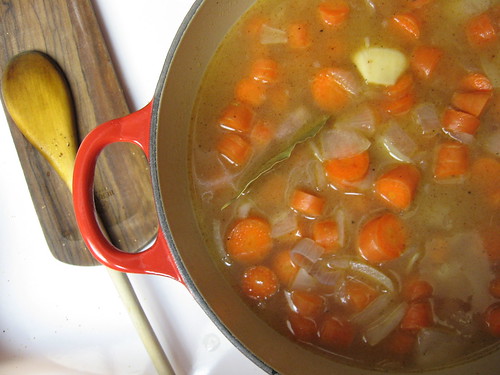
Carrot soup is always good, and it's a fine way to make use of sad, starchy winter carrots. However, this soup really shines with the sweetest, small spring carrots you can find. With good, sweet carrots, you don't even need to use stock in this soup; I just used water and added a crushed garlic clove and bay leaf to the vegetables while they were cooking.
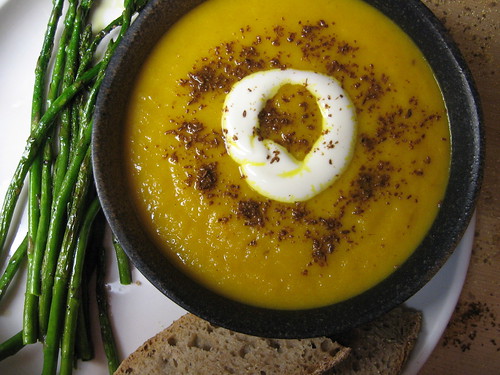
Spiced Carrot Soup
Adapted from a Bon Appétit recipe for "Moroccan Carrot Soup" (which bears no resemblance to anything I ever ate in Morocco, for the record).
2 teaspoons cumin seeds
2 tablespoons butter or olive oil
½ large yellow onion, chopped
1 pound (usually one bunch) small-medium sweet spring carrots
1 clove garlic, peeled and lightly crushed (if using water)
1 bay leaf (if using water)
1/8 teaspoon ground allspice
pinch smoked paprika (optional)
2½ cups water or mild vegetable broth
1 tablespoon honey
2 teaspoons fresh lemon juice, plus more if needed
salt to taste
a few dollops plain yoghurt, preferably whole-milk
Set a dry heavy skillet over medium-high heat. When hot, add the cumin seeds and stir/shake until fragrant and deep brown, 2-3 minutes. Transfer to a mortar and crush into a coarse powder; set aside.
Heat the butter or oil in a medium pot. Add the onions and cook until translucent and softened but not browned, 5-7 minutes. Meanwhile, wash the carrots and chop them into a rough dice (there's no need to peel them if they are sweet young carrots; if they are older or woody, you may wish to do so). Add the carrots, garlic & bay leaf (if using), allspice, paprika, and about ½ teaspoon of the cumin and stir to combine.
Add the water or stock and bring to a boil, then lower the heat to a simmer and mostly cover. Simmer until the carrots are very tender, about 20 minutes.
Purée in batches in a blender (letting a cool a bit for your safety), or—the much easier option, in my opinion—take the pot off the heat and use an immersion blender to purée until the mixture is smooth. Stir in the honey, lemon juice, and some salt; taste and adjust seasoning as desired. With sweet carrots you may prefer a bit more lemon juice.
Return the soup to a bare simmer. Serve in bowls or mugs with a dollop of yoghurt and a generous sprinkle of spiced cumin, preferably with some warm crusty bread alongside.
Serves 4 (maybe 5?) as a side, 3 as a main dish
We lost somebody—somebody that I haven't written about much, if at all, but who had wormed his way into every part of my life.
This is Magnus. We adopted him, along with his sister Greta, just over six years ago. He was a giant of a cat: 17 pounds of solid muscle, built like a mini mountain lion. After surviving 3 surgeries for an aggressive but benign tumor in his leg, he got hit with a battle he couldn't beat: lung cancer. Thankfully, it was fast—he started having trouble breathing (we thought it was his normal springtime allergies) on a Friday, and we said goodbye on the following Tuesday.
As a cat who couldn't get enough playtime and acted like a kitten every single day until that Friday, I can only assume that had he a choice, he would have chosen ten great years without the frustration of aging. Not that it makes it any easier for those of us who are left.
Magnus took after his mama when it came to food, too. While I was a little bit fanatical about feeding him well (yes, I am one of those pet parents), his tastes were quite broad. Nothing made him happier than a piece of pineapple. He once crept up behind Mike and stole a piece of smoked gouda—he speared it on one claw and ran away on three legs before devouring it. He would come running when he heard me open a yoghurt container, knowing that he got to lick the plastic seal before I threw it away. In perhaps my personal favorite example of his devilry, he once caused a diversion in the kitchen—jumping onto a counter and throwing a bag of bread on the ground—so that he could steal a plate of leftover barbecue when Mike ran into the kitchen.
He may have been bad, but he was also the best.
That being said, I have been cooking. I have another iteration of my walnut cake, I have pickled kale and daikon (separately, not together), I have lemon pie and caramelized! white! chocolate! pudding! But today, I have something simple, comforting, and warm. Something to eat when spring vegetables are arriving but evenings are still cool; something to serve in a big mug and to eat while wrapped up in a wool blanket. I'm talking about spiced carrot soup.
Carrot soup is always good, and it's a fine way to make use of sad, starchy winter carrots. However, this soup really shines with the sweetest, small spring carrots you can find. With good, sweet carrots, you don't even need to use stock in this soup; I just used water and added a crushed garlic clove and bay leaf to the vegetables while they were cooking.
Spiced Carrot Soup
Adapted from a Bon Appétit recipe for "Moroccan Carrot Soup" (which bears no resemblance to anything I ever ate in Morocco, for the record).
2 teaspoons cumin seeds
2 tablespoons butter or olive oil
½ large yellow onion, chopped
1 pound (usually one bunch) small-medium sweet spring carrots
1 clove garlic, peeled and lightly crushed (if using water)
1 bay leaf (if using water)
1/8 teaspoon ground allspice
pinch smoked paprika (optional)
2½ cups water or mild vegetable broth
1 tablespoon honey
2 teaspoons fresh lemon juice, plus more if needed
salt to taste
a few dollops plain yoghurt, preferably whole-milk
Set a dry heavy skillet over medium-high heat. When hot, add the cumin seeds and stir/shake until fragrant and deep brown, 2-3 minutes. Transfer to a mortar and crush into a coarse powder; set aside.
Heat the butter or oil in a medium pot. Add the onions and cook until translucent and softened but not browned, 5-7 minutes. Meanwhile, wash the carrots and chop them into a rough dice (there's no need to peel them if they are sweet young carrots; if they are older or woody, you may wish to do so). Add the carrots, garlic & bay leaf (if using), allspice, paprika, and about ½ teaspoon of the cumin and stir to combine.
Add the water or stock and bring to a boil, then lower the heat to a simmer and mostly cover. Simmer until the carrots are very tender, about 20 minutes.
Purée in batches in a blender (letting a cool a bit for your safety), or—the much easier option, in my opinion—take the pot off the heat and use an immersion blender to purée until the mixture is smooth. Stir in the honey, lemon juice, and some salt; taste and adjust seasoning as desired. With sweet carrots you may prefer a bit more lemon juice.
Return the soup to a bare simmer. Serve in bowls or mugs with a dollop of yoghurt and a generous sprinkle of spiced cumin, preferably with some warm crusty bread alongside.
Serves 4 (maybe 5?) as a side, 3 as a main dish
08 April 2012
Teasing
It helps, when planning a trip with limited internet access, to finish and publish a blog post before you go. Oh well. I had a fabulous trip, part of which included hanging out with my college best friend—on our old college campus no less. The nostalgia-fueled meals, coffees, and ice cream weren't bad, either.
Happy Easter! I don't have anything Easter themed ready for the day, but here's a sunny picture to tide you for a few days.

And another taste (sorry, couldn't resist) of what's to come:
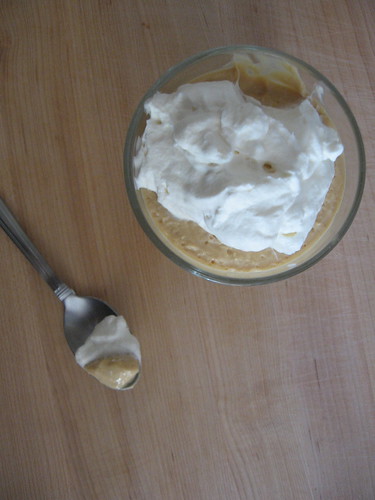
That's Meyer lemon macarons filled with Meyer lemon curd up top, and Caramelized White Chocolate Pudding below. My dessert making has been a little bit haphazard of late, but the stuff I've been making, when I get around to it, has been pretty fantastic. In honor of Easter and the tail end of Meyer Lemon season, I will be making a Shaker Lemon Pie this evening, but for you, I'm adding to the endless piles of chocolate that appear on this holiday.
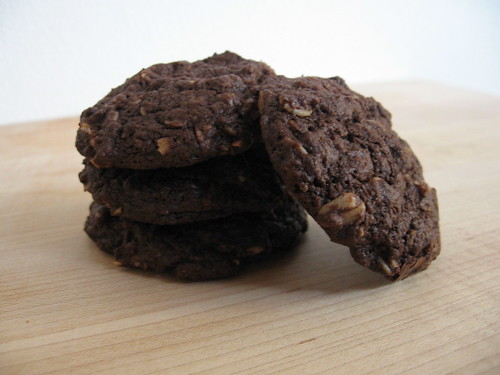
These cookies, however, are much better than a boring hollow chocolate bunny. Kind of like a brownie in cookie form, these have chocolate three ways, brown sugar and oats for a perfectly chewy texture, and just a touch of cinnamon. Also like brownies, they're a bit fragile, especially when warm, so I prefer to make smaller cookies.
I've noticed a real dearth of cookie recipes on the blog, which is weird—cookies are some of my favorite desserts, and I have all sorts of classics that haven't gotten up here yet. I've been making these cookies for several years, and finally they're here, thanks to a promise to provide the recipe to several online friends.
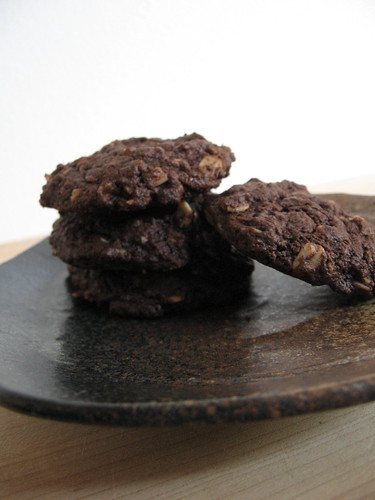
Oatmeal Brownie Cookies
Heavily adapted from a recipe in Baking: From My Home to Yours. This is a cookie that, in my opinion, requires a cold glass of milk, but they'd also probably be great with ice cream or even a cup of coffee. I'd also imagine that they would be pretty good with some chopped nuts, but as I'm not usually partial to nuts in cookies, I've never tried it.
2.5 ounces unsweetened cocoa powder, natural or Dutched (about ¾ cup)
7 ounces unbleached flour (about 1¼ cup) (Note: last time I used 3 ounces whole wheat pastry flour and 4 unbleached flour, and it added a nice body to the cookies)
1 teaspoon baking soda
¼ teaspoon baking powder
1 teaspoon salt
½ teaspoon cinnamon
12 ounces bittersweet chocolate, chopped and divided
9 ounces dark brown sugar (about 1¼ cup packed)
8 ounces (2 sticks) unsalted butter, in pieces (cold is fine)
2 large eggs
1 teaspoon vanilla
6 ounces rolled oats (about 1½ cups)
Place the oven racks in top & bottom thirds of the oven and preheat to 350ºF. Line two baking sheets with parchment or silicone; set aside.
Sift the cocoa powder into a large bowl. Add the flour, soda, baking powder, salt, and cinnamon and whisk to combine; set aside.
Set a medium heatproof bowl over a pan of simmering water. Add the sugar and 8 ounces of the chocolate (reserving the rest) and stir regularly. When the chocolate is about half melted, add the butter and continue to stir until the entire mixture is melted—it will still be grainy. Don't overheat, or the butter will separate.
Remove the pan from the heat and whisk in the eggs one at a time; the mixture will become very shiny. Beat in the vanilla, then scrape the mixture into the dry ingredients. Stir until mostly combined, then add the remaining chocolate chunks and the oats and stir just until there are no more streaks of flour.
Drop the dough by level tablespoonfuls onto the baking sheets; a dozen to a sheet should give them space to spread out. Bake 12-14 minutes, rotating top to bottom and front to back halfway through the cooking time. Transfer to a rack to cool. If the cookies are very fragile (especially if you made bigger ones), leave on the pan to cool for a minute or two before transferring.
Repeat with remaining dough, cooling the sheets between batches. You can chill the dough before baking, but the cookies will spread a little bit less and take longer to cook.
These will keep, well wrapped, for several days at room temperature and for a couple months (if you can stand it) in the freezer.
Makes about 5 dozen cookies
Happy Easter! I don't have anything Easter themed ready for the day, but here's a sunny picture to tide you for a few days.
And another taste (sorry, couldn't resist) of what's to come:
That's Meyer lemon macarons filled with Meyer lemon curd up top, and Caramelized White Chocolate Pudding below. My dessert making has been a little bit haphazard of late, but the stuff I've been making, when I get around to it, has been pretty fantastic. In honor of Easter and the tail end of Meyer Lemon season, I will be making a Shaker Lemon Pie this evening, but for you, I'm adding to the endless piles of chocolate that appear on this holiday.
These cookies, however, are much better than a boring hollow chocolate bunny. Kind of like a brownie in cookie form, these have chocolate three ways, brown sugar and oats for a perfectly chewy texture, and just a touch of cinnamon. Also like brownies, they're a bit fragile, especially when warm, so I prefer to make smaller cookies.
I've noticed a real dearth of cookie recipes on the blog, which is weird—cookies are some of my favorite desserts, and I have all sorts of classics that haven't gotten up here yet. I've been making these cookies for several years, and finally they're here, thanks to a promise to provide the recipe to several online friends.
Oatmeal Brownie Cookies
Heavily adapted from a recipe in Baking: From My Home to Yours. This is a cookie that, in my opinion, requires a cold glass of milk, but they'd also probably be great with ice cream or even a cup of coffee. I'd also imagine that they would be pretty good with some chopped nuts, but as I'm not usually partial to nuts in cookies, I've never tried it.
2.5 ounces unsweetened cocoa powder, natural or Dutched (about ¾ cup)
7 ounces unbleached flour (about 1¼ cup) (Note: last time I used 3 ounces whole wheat pastry flour and 4 unbleached flour, and it added a nice body to the cookies)
1 teaspoon baking soda
¼ teaspoon baking powder
1 teaspoon salt
½ teaspoon cinnamon
12 ounces bittersweet chocolate, chopped and divided
9 ounces dark brown sugar (about 1¼ cup packed)
8 ounces (2 sticks) unsalted butter, in pieces (cold is fine)
2 large eggs
1 teaspoon vanilla
6 ounces rolled oats (about 1½ cups)
Place the oven racks in top & bottom thirds of the oven and preheat to 350ºF. Line two baking sheets with parchment or silicone; set aside.
Sift the cocoa powder into a large bowl. Add the flour, soda, baking powder, salt, and cinnamon and whisk to combine; set aside.
Set a medium heatproof bowl over a pan of simmering water. Add the sugar and 8 ounces of the chocolate (reserving the rest) and stir regularly. When the chocolate is about half melted, add the butter and continue to stir until the entire mixture is melted—it will still be grainy. Don't overheat, or the butter will separate.
Remove the pan from the heat and whisk in the eggs one at a time; the mixture will become very shiny. Beat in the vanilla, then scrape the mixture into the dry ingredients. Stir until mostly combined, then add the remaining chocolate chunks and the oats and stir just until there are no more streaks of flour.
Drop the dough by level tablespoonfuls onto the baking sheets; a dozen to a sheet should give them space to spread out. Bake 12-14 minutes, rotating top to bottom and front to back halfway through the cooking time. Transfer to a rack to cool. If the cookies are very fragile (especially if you made bigger ones), leave on the pan to cool for a minute or two before transferring.
Repeat with remaining dough, cooling the sheets between batches. You can chill the dough before baking, but the cookies will spread a little bit less and take longer to cook.
These will keep, well wrapped, for several days at room temperature and for a couple months (if you can stand it) in the freezer.
Makes about 5 dozen cookies
03 March 2012
There are always muffins
There's nothing like a bag of lemons in my fridge to keep me in the kitchen. Tart? Check. Cake? Check. Pie? Check. Ice cream? Well, not yet, but it probably won't be long. In the meantime, there are always muffins.
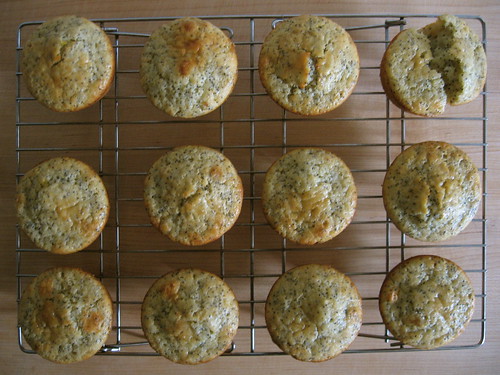
Muffins aren't my favorite quickbread—banana bread will probably always hold that title—but when it comes to quick weekend breakfasts, you can't do much better. With only a few dirty dishes (never mind that one of them is the much-hated muffin pan), even the sleepiest cook can have a batch ready in less than an hour.
Lemon-poppy seed muffins at bakeries are often aggressively lemony (and daffodil yellow). Clearly, I'm all about lemons, but good grief! Maybe it's because I'm usually making them at 7 am on a Saturday morning, but I prefer my muffins (and the lemon in them) in moderation.
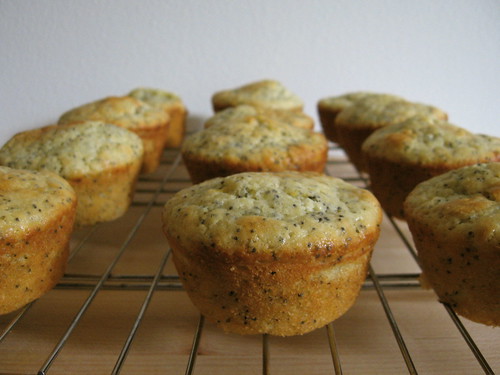
Lemon-Poppy Seed Muffins
If you like a bit more lemon, add ½ teaspoon lemon extract to the wet ingredients before mixing it all together.
4 ounces granulated sugar (½ cup)
zest and juice (about 3 tablespoons) from 1 lemon (I use Meyer)
8 ounces unbleached white flour (2 cups)
1 teaspoon baking powder
½ teaspoon baking soda
½ teaspoon salt
2 tablespoons poppy seeds
1 egg
11 ounces milk, preferably whole (1¼ cups)
3 ounces unsalted butter, melted & cooled (6 tablespoons)
Grease the cups of a muffin pan with butter or line with paper or foil cups; set aside. Preheat the oven to 400ºF.
Measure the sugar into a large bowl. Zest the lemon into the bowl and rub it into the sugar briefly. Add the flour, baking powder, soda, salt, and poppy seeds and mix together with a fork or whisk until combined.
In a medium bowl, lightly whisk the egg. Add the milk and whisk well, then stir in the melted butter. Dump the wet ingredients into the dry and stir just until combined. Scrape the batter into the muffin cups (they will be around three-quarters full).
Bake until a tester in one of the middle muffins comes out clean, about 20-25 minutes. Let cool on a rack for a few minutes before unmolding. Unlike some muffins, lemon ones are usually better once cooled.
Makes about a dozen muffins
Muffins aren't my favorite quickbread—banana bread will probably always hold that title—but when it comes to quick weekend breakfasts, you can't do much better. With only a few dirty dishes (never mind that one of them is the much-hated muffin pan), even the sleepiest cook can have a batch ready in less than an hour.
Lemon-poppy seed muffins at bakeries are often aggressively lemony (and daffodil yellow). Clearly, I'm all about lemons, but good grief! Maybe it's because I'm usually making them at 7 am on a Saturday morning, but I prefer my muffins (and the lemon in them) in moderation.
Lemon-Poppy Seed Muffins
If you like a bit more lemon, add ½ teaspoon lemon extract to the wet ingredients before mixing it all together.
4 ounces granulated sugar (½ cup)
zest and juice (about 3 tablespoons) from 1 lemon (I use Meyer)
8 ounces unbleached white flour (2 cups)
1 teaspoon baking powder
½ teaspoon baking soda
½ teaspoon salt
2 tablespoons poppy seeds
1 egg
11 ounces milk, preferably whole (1¼ cups)
3 ounces unsalted butter, melted & cooled (6 tablespoons)
Grease the cups of a muffin pan with butter or line with paper or foil cups; set aside. Preheat the oven to 400ºF.
Measure the sugar into a large bowl. Zest the lemon into the bowl and rub it into the sugar briefly. Add the flour, baking powder, soda, salt, and poppy seeds and mix together with a fork or whisk until combined.
In a medium bowl, lightly whisk the egg. Add the milk and whisk well, then stir in the melted butter. Dump the wet ingredients into the dry and stir just until combined. Scrape the batter into the muffin cups (they will be around three-quarters full).
Bake until a tester in one of the middle muffins comes out clean, about 20-25 minutes. Let cool on a rack for a few minutes before unmolding. Unlike some muffins, lemon ones are usually better once cooled.
Makes about a dozen muffins
Subscribe to:
Posts
(
Atom
)
